Scientific Oration by Prof. Deddy Priatmodjo Koesrindartoto: "Economist as an Engineer" for a Resilient and Equitable Economy
By Dina Avanza Mardiana - Mikrobiologi, 2022
Editor M. Naufal Hafizh, S.S.
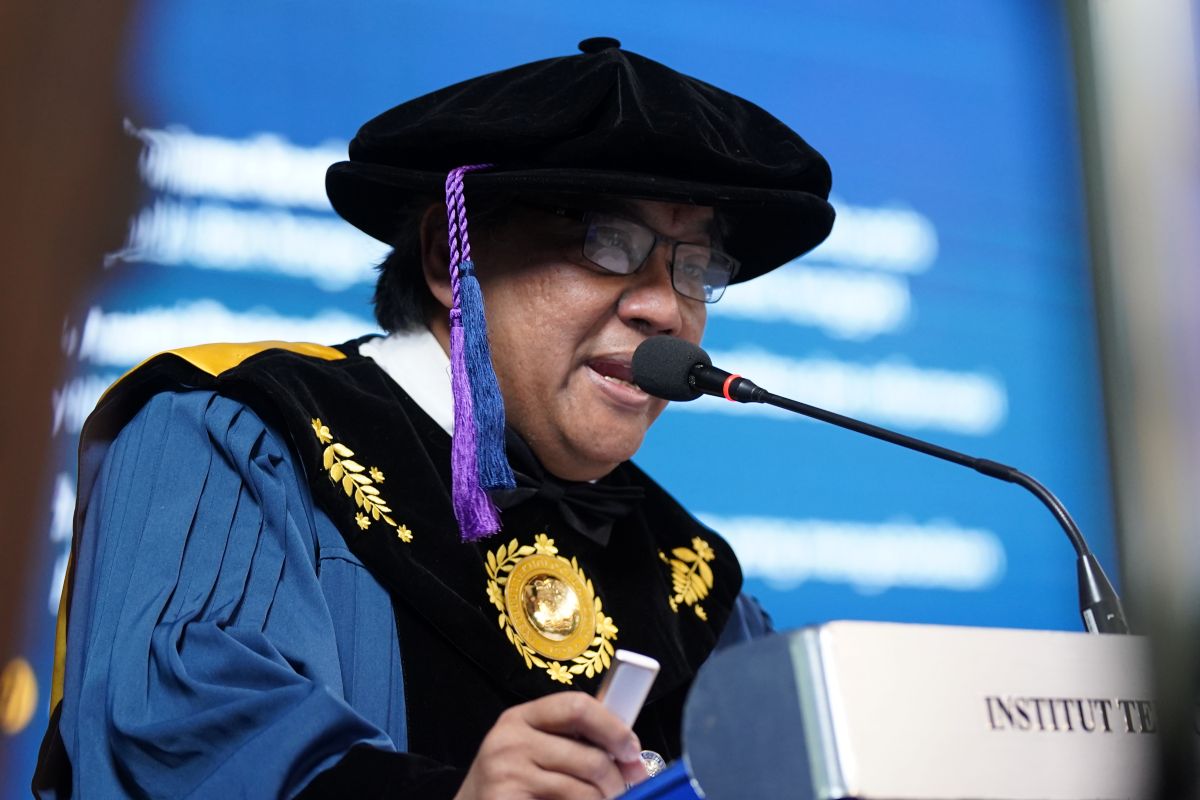
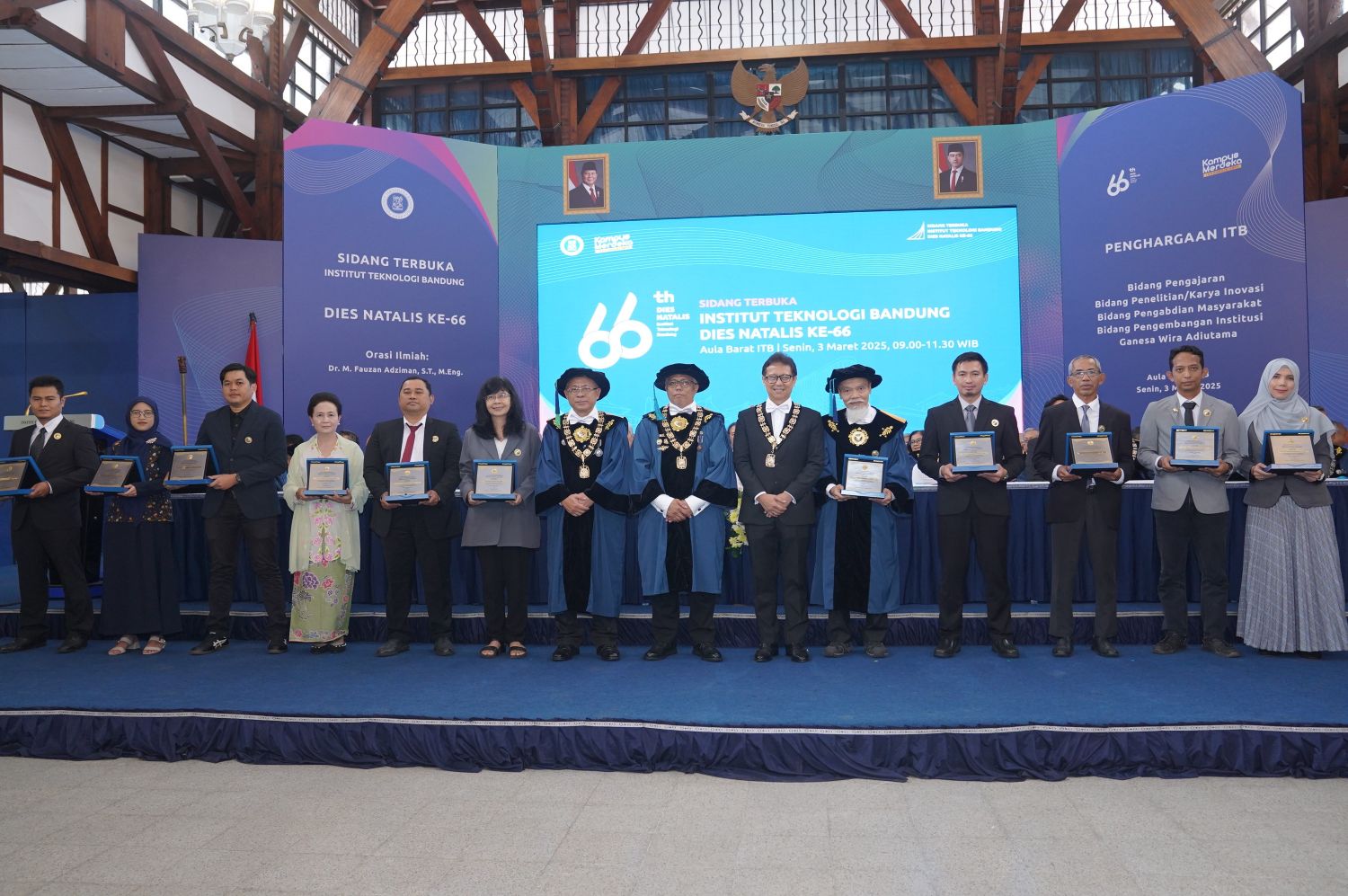
BANDUNG, itb.ac.id - The Board of Professors of Institut Teknologi Bandung (FGB ITB) held an Open Session for Professorial Scientific Orations at the ITB West Hall on Saturday (July 11th, 2026). On this occasion, Prof. Deddy Priatmodjo Koesrindartoto from the School of Business and Management (SBM) ITB delivered a scientific oration titled, “'Economist as an Engineer' to Build a Resilient and Equitable Economy.”
The oration highlighted the need for a fundamental paradigm shift in the practice of economics. Citing Alvin Roth (2002), Prof. Deddy explained that modern economists should no longer serve merely as observers or data analysts.
Instead, economists should act as engineers capable of designing, modeling, and evaluating the rules that govern an economic system. This approach is necessary to ensure that interactions among actors within the system produce the desired welfare outcomes.
To realize this design, Prof. Deddy employs the Agent-Based Computational Economics (ACE) approach. He argued that classical analytical models often oversimplify economic reality into a “smooth landscape” that naturally gravitates toward a perfect point of equilibrium.
In reality, however, the economy is a “rugged landscape”—characterized by peaks and valleys—where heterogeneous agents interact in highly complex ways. Through ACE computation, public policies and market regulations can be simulated in a virtual laboratory prior to real-world implementation.
When designing an economic system, Prof. Deddy emphasized two inseparable core objectives: resilience and equity. Resilience is not merely a system's ability to return to its original state (“bouncing back”) after a crisis.
A truly resilient system must be able to absorb shocks, adapt, and possess the transformative capacity to leap toward a more robust structure, effectively “bouncing forward.”
Meanwhile, economic equity was outlined through four dimensions: distributive justice, procedural justice, capability, and intergenerational justice. “Fairness is not about dividing a pie into perfectly equal slices for everyone, but rather ensuring that the processes and regulations are proportional,” he stated.
He has demonstrated the efficacy of these computational ideas and instruments through various strategic research contributions. Notable examples include the development of the AMES platform to simulate electricity market regulations, studies on the microstructure and trading behavior within the Indonesia Stock Exchange (IDX), and the management of endowment funds during his tenure as Director of BPUDL ITB.
In his oration, Prof. Deddy also mapped the frontiers of new challenges that Indonesian economic policymakers must urgently address. These challenges include the risk of algorithmic discrimination by Artificial Intelligence (AI) in the financial sector, the imperative for financial regulators to adopt RegTech and SupTech, the supervision of cryptocurrency ecosystems and Decentralized Finance (DeFi), and the implementation of green finance free from greenwashing pitfalls.
Concluding his oration, he delivered a special message regarding the integrity of academic institutions. He warned young academics against getting trapped in the pursuit of superficial metrics. “Do not let metrics replace meaning,” he cautioned.
He further highlighted the true role of an educator, which extends far beyond merely teaching technical skills. “Intellectual courage is the most valuable asset an educator can impart. It is not knowledge, which can become obsolete, nor technical skills, which can be replaced by technology,” he concluded.
.jpg)
.jpg)
.jpg)
.jpg)
.jpg)